
Three Business Marketing Plans for Growth

Growing a business is exciting, but it can also feel like navigating a maze. You want to reach more customers, boost sales, and build a brand that lasts. But where do you start? Well, I’m here to share three powerful business marketing plans that can help you do just that. These strategies are practical, actionable, and designed to fit small businesses perfectly. Ready to dive in? Let’s go!
Why Business Marketing Plans Matter
Before we jump into the strategies, let’s talk about why having a solid business marketing plan is crucial. Imagine setting out on a road trip without a map or GPS. You might get lucky, but chances are you’ll take wrong turns, waste time, and miss out on the best stops. A marketing plan is your roadmap. It helps you focus your efforts, allocate resources wisely, and measure your progress.
A good plan also keeps you flexible. Markets change, customer preferences shift, and new tools pop up all the time. With a plan, you can adapt without losing sight of your goals. Plus, it’s a great way to communicate your vision to your team or partners.
So, what should a business marketing plan include? At its core, it should outline your target audience, key messages, marketing channels, budget, and metrics for success. Now, let’s explore three strategies that fit perfectly into this framework.
Crafting Effective Business Marketing Plans: The Three Strategies
1. Content Marketing - Tell Your Story
Content marketing is all about creating valuable, relevant content that attracts and engages your audience. Think blog posts, videos, social media updates, or newsletters. The goal? To build trust and position yourself as an expert in your field.
Why does this work? People don’t want to be sold to all the time. They want to learn, be entertained, or solve problems. When you provide that, they’re more likely to remember you and choose your business when they’re ready to buy.
How to get started:
Identify your audience’s pain points and interests.
Create a content calendar to stay consistent.
Use a mix of formats - articles, infographics, videos.
Optimize your content for search engines (SEO).
Share your content on social media and email.
For example, if you run a local bakery, you could share recipes, baking tips, or behind-the-scenes stories. This not only showcases your expertise but also creates a connection with your customers.
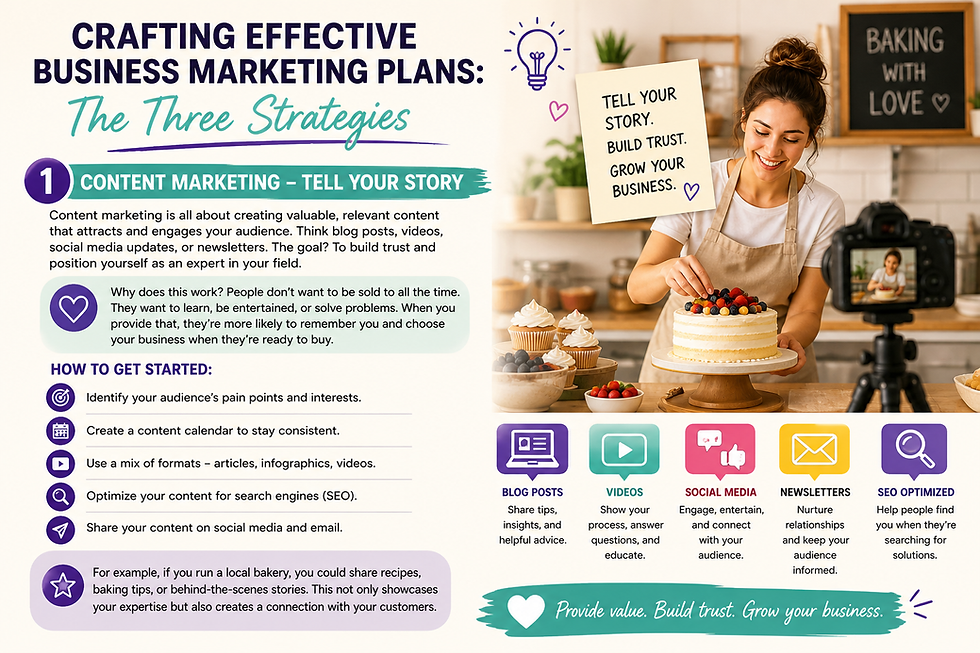
Creating engaging content helps build trust and attract customers.
2. Social Media Marketing - Engage and Grow Your Community
Social media is a powerhouse for small businesses. It’s where your customers hang out, share opinions, and discover new products. But it’s not just about posting pretty pictures. It’s about engaging in conversations, responding to feedback, and building relationships.
Here’s the secret: focus on quality over quantity. Pick one or two platforms where your audience is most active and do them well. Use a mix of posts - educational, promotional, and fun. Don’t forget to use hashtags and tag relevant accounts to increase your reach.
Tips for success:
Post regularly but don’t overwhelm your followers.
Use stories and live videos to show authenticity.
Run contests or giveaways to boost engagement.
Collaborate with local influencers or complementary businesses.
Monitor analytics to see what works and tweak your approach.
Imagine you own a fitness studio. Sharing workout tips, client success stories, and live Q&A sessions can create a loyal online community that spreads the word about your services.

Engaging content on social media helps build a loyal community.
3. Email Marketing - Stay Connected and Convert
Email marketing might sound old-school, but it’s still one of the most effective ways to nurture leads and drive sales. Why? Because it lands directly in your customer’s inbox, where they can read your message at their convenience.
The key is to provide value and personalize your emails. Nobody likes spam, so make sure your emails are relevant and interesting. Use catchy subject lines, clear calls to action, and segment your list to tailor messages.
How to make email marketing work:
Collect emails through your website, events, or in-store.
Send a welcome email to new subscribers.
Share exclusive offers, updates, or helpful tips.
Use automation to send timely messages (like birthday discounts).
Track open rates and click-throughs to improve your campaigns.
For instance, a boutique clothing store could send weekly style tips, new arrivals, and special discounts to keep customers coming back.
What are the 5 marketing strategies?
You might be wondering, “Are there more than these three?” Absolutely! While I’m focusing on three key plans here, it’s good to know about other strategies that can complement your efforts:
Search Engine Optimization (SEO) - Improve your website’s visibility on Google.
Pay-Per-Click Advertising (PPC) - Use paid ads to drive targeted traffic.
Referral Marketing - Encourage happy customers to refer friends.
Event Marketing - Host or participate in local events to build brand awareness.
Partnership Marketing - Collaborate with other businesses for mutual benefit.
Each of these can be powerful, but the best approach depends on your unique business and goals. Start with the three strategies above, then explore these as you grow.
Putting It All Together: Your Growth Roadmap
Now that you know the three business marketing plans, how do you make them work together? Here’s a simple roadmap:
Set clear goals - What do you want to achieve? More leads, higher sales, better brand recognition?
Know your audience - Who are they? What do they care about? Where do they spend time online?
Choose your channels - Pick the platforms and tools that fit your audience and resources.
Create a content calendar - Plan your posts, emails, and campaigns in advance.
Measure and adjust - Use analytics to track performance and tweak your strategy.
Remember, consistency is key. Marketing is a marathon, not a sprint. Celebrate small wins and keep learning.
Ready to Grow Your Business?
Marketing can feel overwhelming, but it doesn’t have to be. By focusing on these three business marketing plans - content marketing, social media marketing, and email marketing - you’re setting yourself up for success. These strategies help you connect with your audience, build trust, and drive sales in a way that feels natural and sustainable.
If you want to dive deeper into business marketing strategies, there are plenty of resources and experts ready to help. But the best place to start is right where you are, with a plan that fits your business and your goals.
So, what’s your first step? Maybe it’s writing your first blog post, scheduling your next social media update, or crafting a welcome email. Whatever it is, take that step today. Your business growth journey starts now!
Happy marketing!


Comments